|
|
No.8 ‘The Green Hornet’ Timbertown, Wauchope |
|
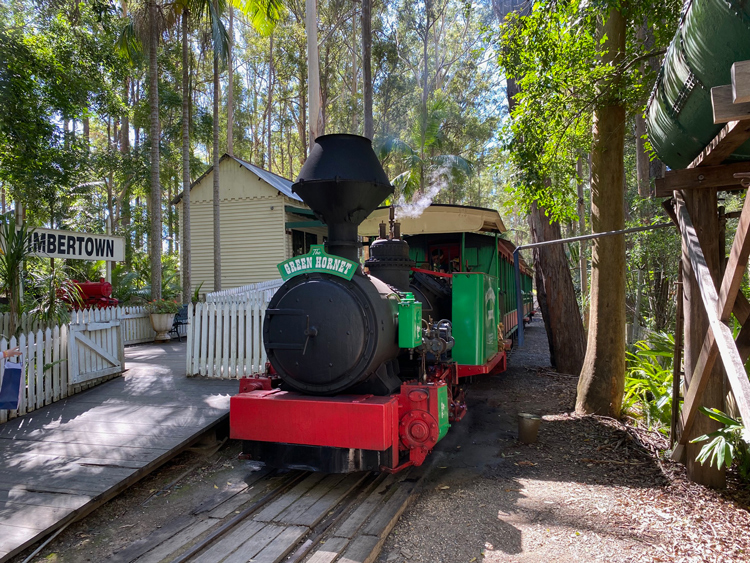
My visit to Timbertown on 10 April 2023 found ‘The Green
Hornet’ in service and awaiting its next departure.
The railway station was one of the first buildings
encountered on entry to Timbertown, with an antique boiler serving as
water-tank.
This wonderful old John Fowler loco is seen awaiting its
next departure within the bushland station surrounds.
|
Builder |
John
Fowler & Co, Leeds |
|
Builder’s Number & Year |
12271
of 1910 |
|
Wheel Arrangement |
0-6-0T |
|
This
locomotive was built by John Fowler & Co in Leeds and had been No.8 on
the roster at Macknade Mill, situated on the Herbert River near Ingham,
Queensland. It was originally preserved as a static exhibit at Lucinda Point,
before moving to the newly established Timbertown heritage village at
Wauchope, NSW in April 1975. Here it was restored to operation in lined apple
green livery, receiving the name ‘The Green Hornet’. An
interesting modification to this locomotive is a large inspection / access
port welded into the side of the boiler, and sitting ~45 degrees from
vertical. Apparently, this modification was made at Macknade Mill in the
1960’s. The loco’s owner told me it is very handy for maintenance and was put
to good use in the 2022 period when his son was able to clamber through the
hole to cut out expired boiler tubes! I first
encountered this locomotive back in 1977 at my first childhood visit to
Timbertown, and in all the years I have known this locomotive, it has always
operated without any boiler clothing, with the rivetted construction of
boiler, firebox and steam dome clearly visible – and providing some
additional interest. The heat coming off the boiler and firebox was always a
feature of this engine – and in summer months, the driver was often quick to
have a cold drink when the train returned to Timbertown station! Timbertown: Timbertown
was a reproduction of an 1880’s pioneer village centred around a sawmilling
community in a bushland setting, complete with a steam-powered sawmill,
blacksmith, stables and various vintage crafts housed in reproduction vintage
buildings. The railway was a key attraction, circling the village via a 2.5km
loop through the forest, including a lengthy trestle bridge snaking through
the local watercourse. Timbertown was first developed by the local council,
including a considerable paid staff manning the various shops and activities,
but over time the site worked through various structures and operating models
looking for financially sustainable business arrangement. Later additions
included gold panning and a steam-powered gold crusher, a miniature railway,
a children’s playground, display sheds for local vintage machinery collectors
and premises for a woodworking club. The mid-north
coast timber industry initially focussed on the Red Cedar (Toona
Ciliata) growing in the region, with the timber selectively logged and
the trunks generally hauled by bullock teams along bush tracks to a local
mill. Some mills employed steam locomotives including Shay and Climax types,
together with some jerry-built copies cobbled together from spare parts! The
giant stumps of Red Cedar trees are a feature of the region, complete with woodcutter’s
step notches in the sides, although most such stumps are now rotting out of
sight and remembrance. One of the ‘houses’ in the Timbertown village was a
large hollow stump, with a doorway cut in one side and a small window in
another, and a basic roof pitched over the top! Timbertown also used to
feature a Bullock team of 6 or so animals that would drag a timber jinker loaded
with a huge log down the main street and into the oval, past a visitor
grandstand, with the drover cracking his bullwhip – a powerful sight. The Timbertown
grounds are heavily forested with Tallowood and Blackbutt trees, but the Red
Cedar is long gone. It would be interesting to know what Red Cedar survives in
north coast forests, and what changes occurred to the broader flora and fauna
following the virtual elimination of Red Cedar from the ecosystem. ‘The Green
Hornet’ loco was in many ways the symbol of Timbertown, and indeed its
preservation career somewhat echoes the ups and downs of Timbertown itself. I
understand it was out of service and awaiting repairs by 1999 and was sold by
the Council in a reduction of Timbertown assets in 1999. My visit to
Timbertown in 2001 found the loco still resident but stored awaiting
overhaul. By January 2011, ‘The Green Hornet’ had again been sold and was
subsequently plinthed in the car park of the Railway Lodge Motel in Queen St,
Taree. Since
2009, Timbertown has been under private family ownership, with the railway
remaining a central attraction together with farmyard animals, set among the
1880’s village atmosphere beneath the tall timbers. The Timbertown social
media pages announced on 16 March 2022 the welcome news that ‘The Green
Hornet’ had been purchased and was returning home to Timbertown. The loco
returned soon after and was quickly restored to operation (including
re-tubing the boiler), replacing ‘Ruby’ in day-to-day service. The
Timbertown locomotive fleet: Four steam
locomotives have been based at Timbertown over the years, listed in order of
arrival: ·
Green Hornet - John Fowler & Co. Ltd, 0-6-0T, b/n
12271 of 1910. ·
Macknade Mill No.6
- Hudswell, Clarke & Co. Ltd, 0-6-0, b/n 1862 of 1952. ·
South Johnstone
No.10 - John Fowler & Co. Ltd, 0-4-2T, b/n 17881 of 1928. ·
PWD No.35 /
Kiama Fowler - John Fowler & Co. Ltd, 0-4-0T, b/n 16089 of 1923. Update
- February 2026: Alas the
Timbertown site including its steam railway has now permanently closed, with
the final day of operation on 28 January 2026. An auction of the railway
equipment and other assets is planned for May 2026. The webmaster
had many visits to Timbertown during his childhood in the 1970’s & 80’s
and I’m sorry to see the site closed. A visit in 1982 with my UK cousins is
particularly remembered in the family due to a marauding emu that was
stealing our picnic sandwiches; that was a damn big seagull to shoo away and
a fun anecdote for the cousins to take home to Somerset! It seems
even the timber itself may have contributed to Timbertown’s ultimate demise –
among the village buildings was a quaint one-classroom schoolhouse in a
bushland setting, which had disappeared by 2026 – I was told it had been
crushed beyond repair by a falling tree! No doubt public liability insurance
was a significant and escalating ongoing expense. I’ve
included some photos of the various Timbertown attractions below after my
final visit there on 11 January 2026. In addition, Will James: Railways has
posted this YouTube video showcasing his visit there on a rainy day
just before closure. |
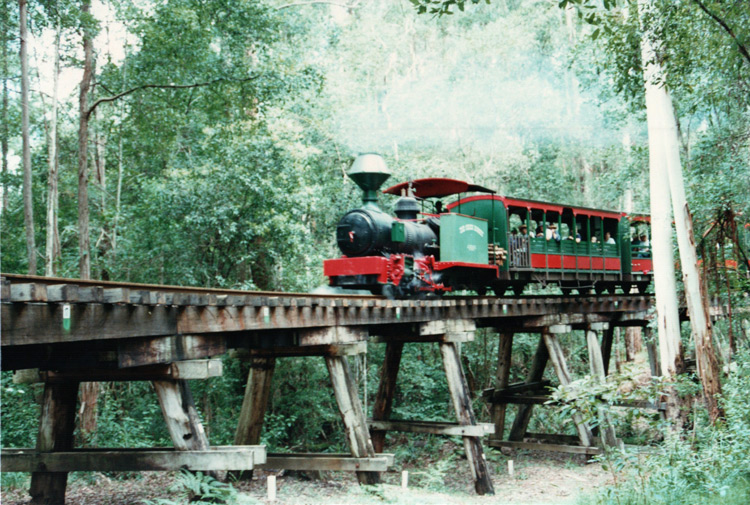
A scanned photo view of ‘The Green Hornet’ crossing the
serpentine trestle bridge on the Timbertown Heritage Steam Railway. 8 March
1997.
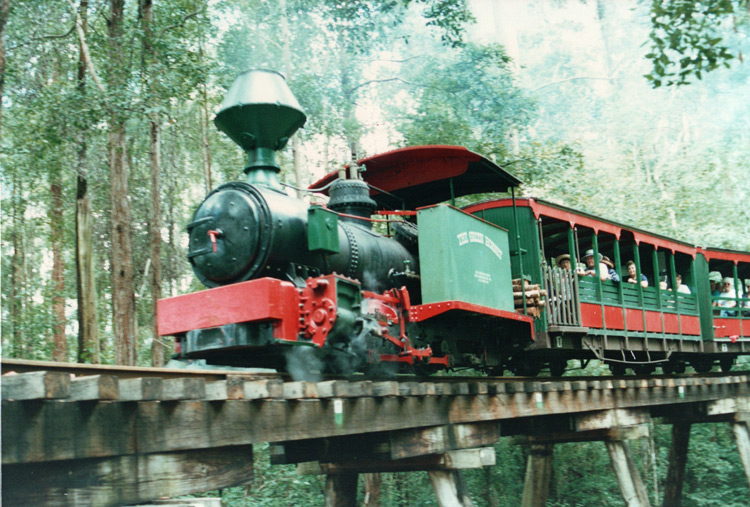
A closer view of Fowler 12271 ‘The Green Hornet’ crossing
the impressive Timbertown trestle on 8 March 1997.
(The webmaster found that marauding bush leeches made the
wait for this photo a tricky business!)
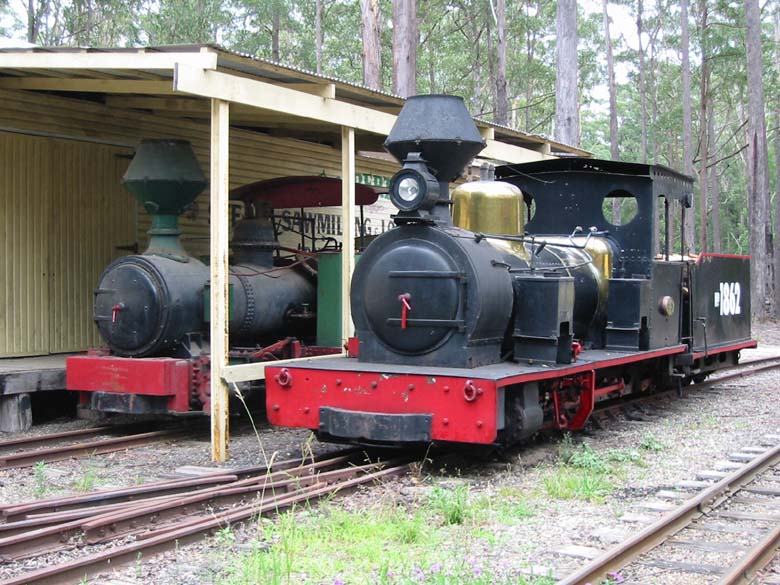
My visit to Timbertown on 28 December 2003 found Hudswell Clarke
b/n 1862 awaiting its next steaming, with ‘The Green Hornet’ stored behind.
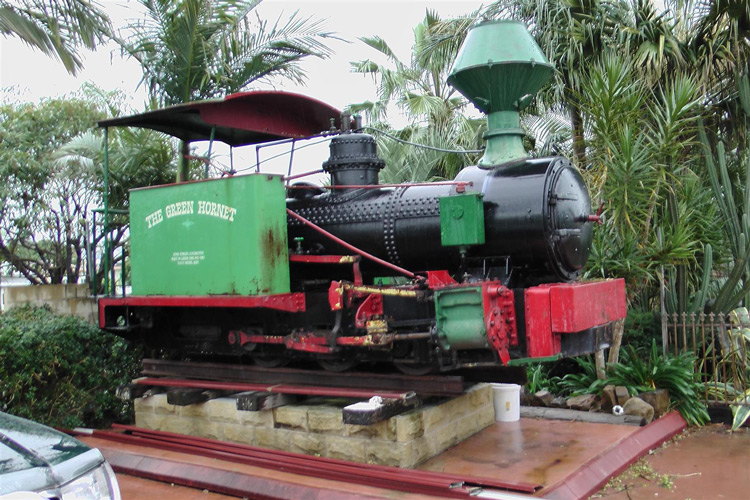
‘The Green Hornet’ plinthed at the Railway Lodge Motel,
Taree on 9 September 2011.
This photo was contributed by Jeremy Williams.
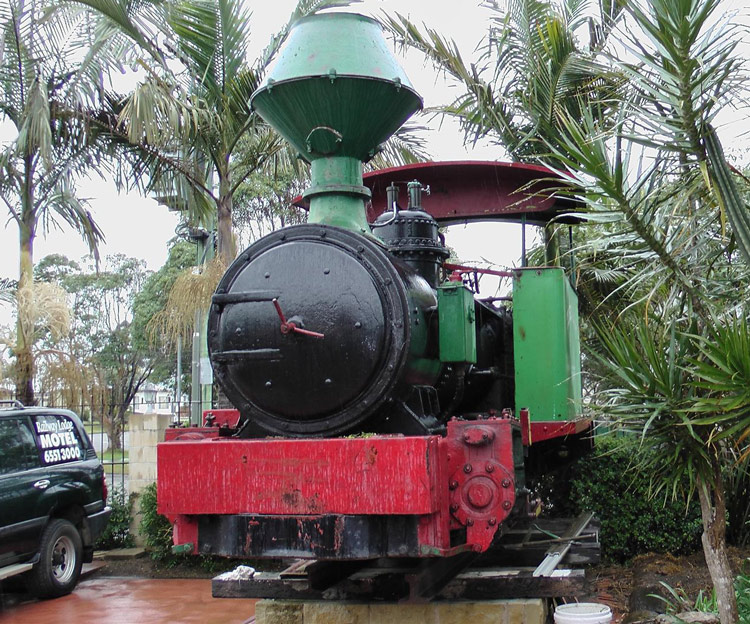
A second view of ‘The Green Hornet’ plinthed at Taree on a
rainy day, 9 September 2011.
Photo contributed with my thanks to Jeremy Williams.
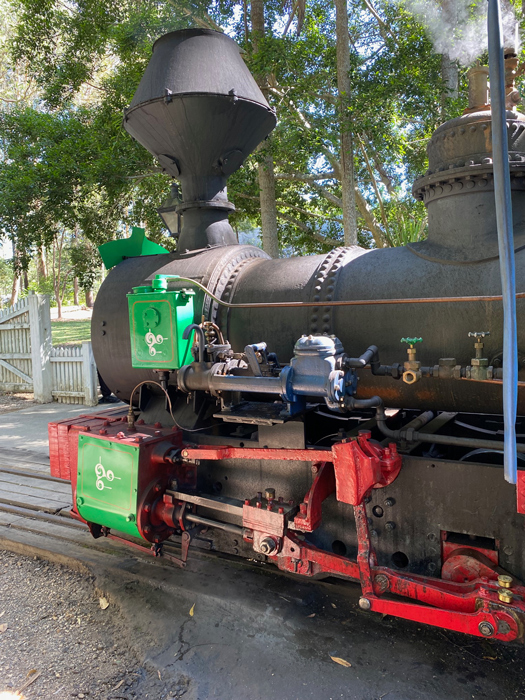
Left cylinder, running gear and water injector pump detail.
10 April 2023.
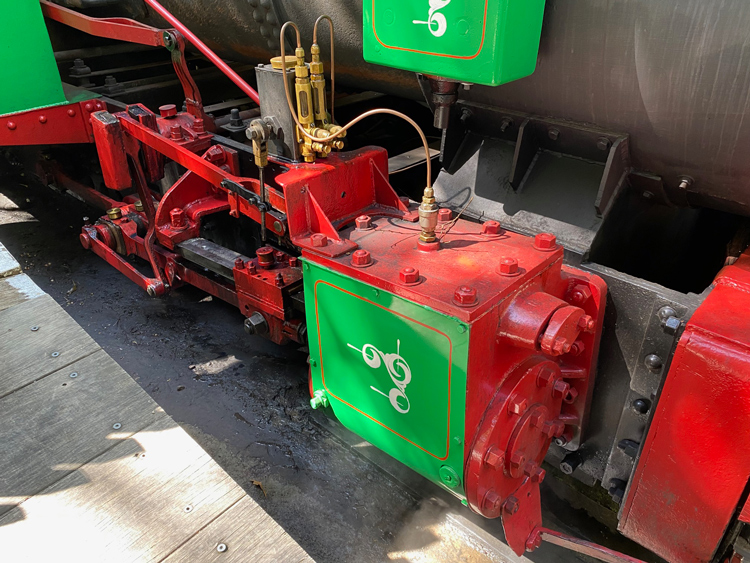
Right cylinder and running gear detail. 10 April 2023.
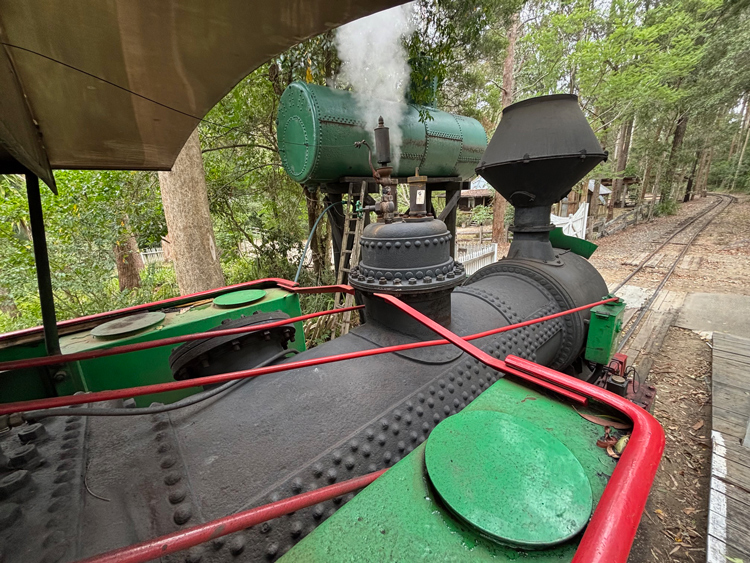
A view of exposed rivetted boiler on 11 January 2026.
The unusual large boiler inspection port can be seen on the far side.
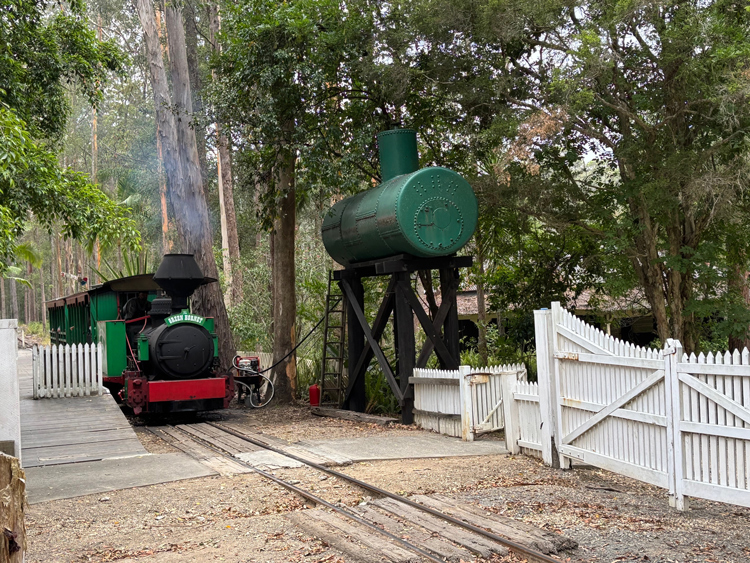
Awaiting departure - 11 January 2026.
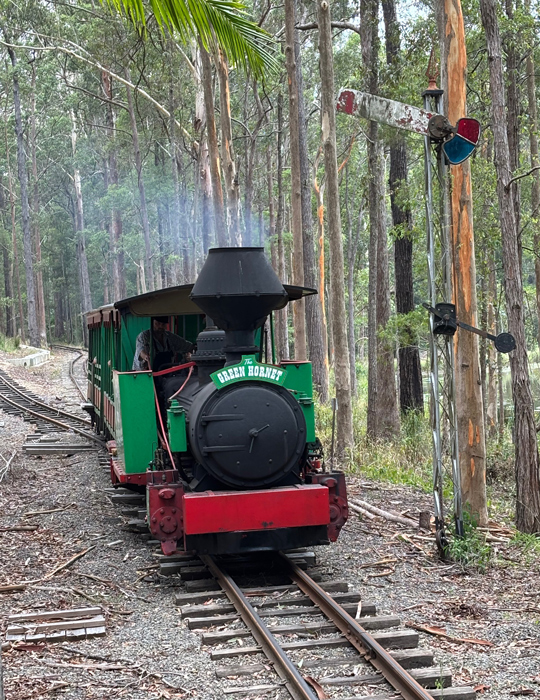
A very weathered lattice signal oversees the train coming
into the station. 11 January 2026.
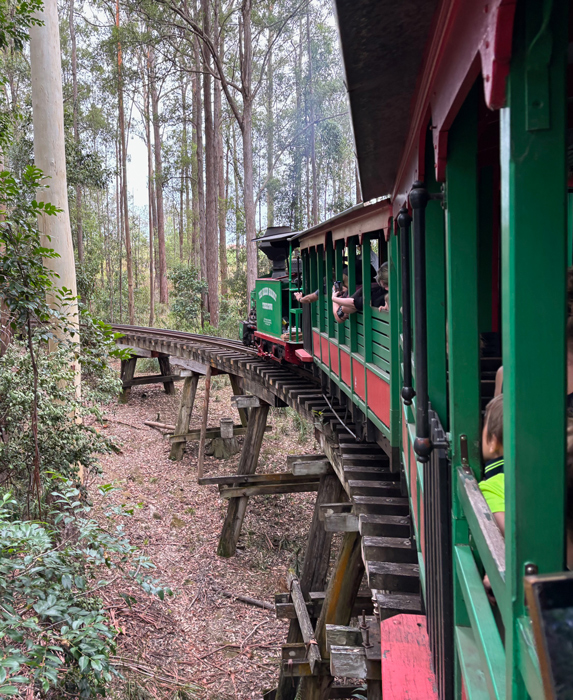
Crossing the serpentine timber trestle through the
watercourse - 11 January 2026.
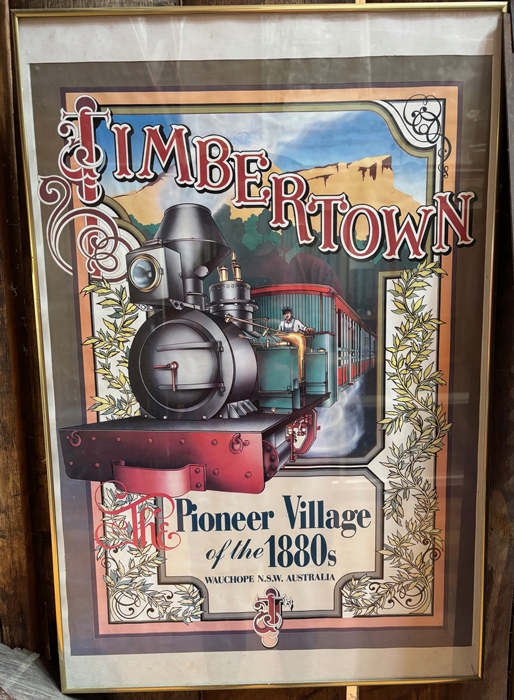
‘The Green Hornet’ features in this promotional poster
displayed in the entrance hall. 11 January 2026.
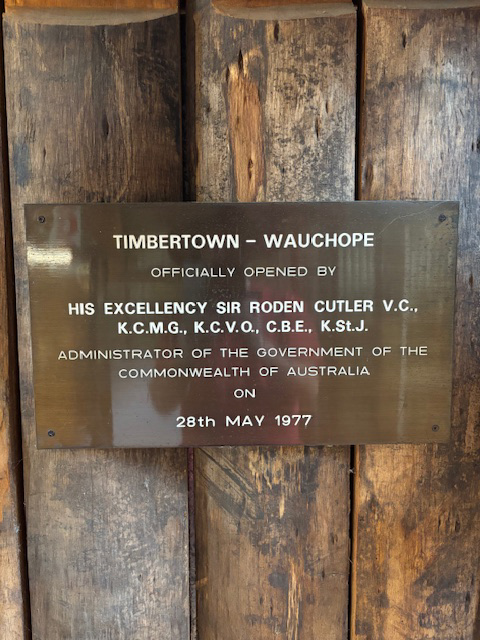
Opening plaque displayed at the Timbertown entrance. 11
January 2026.
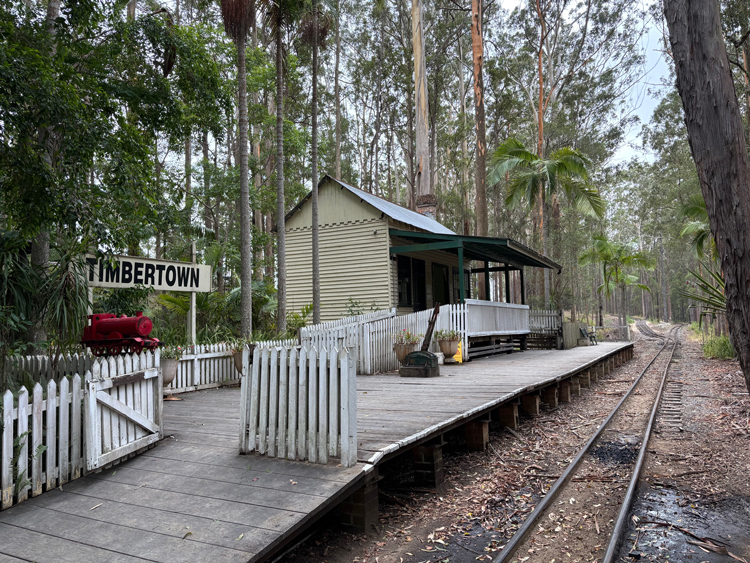
Sleepy Timbertown station awaiting the next train. 11
January 2026.
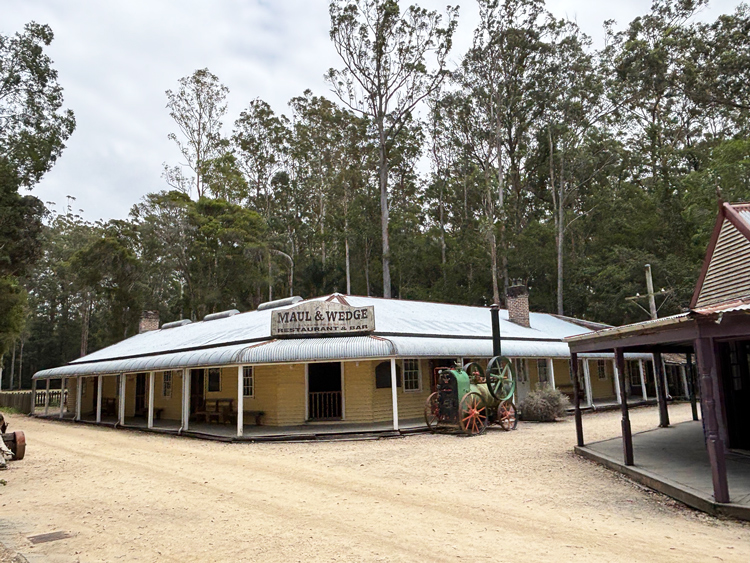
The main crossroads, seen on 11 January 2026.
The Maul & Wedge had served as a restaurant and café in earlier years, but
had since reduced to a function venue,
with the café business moving to the park entrance (and not requiring a visitor
entrance fee) where it benefitted from passing trade.
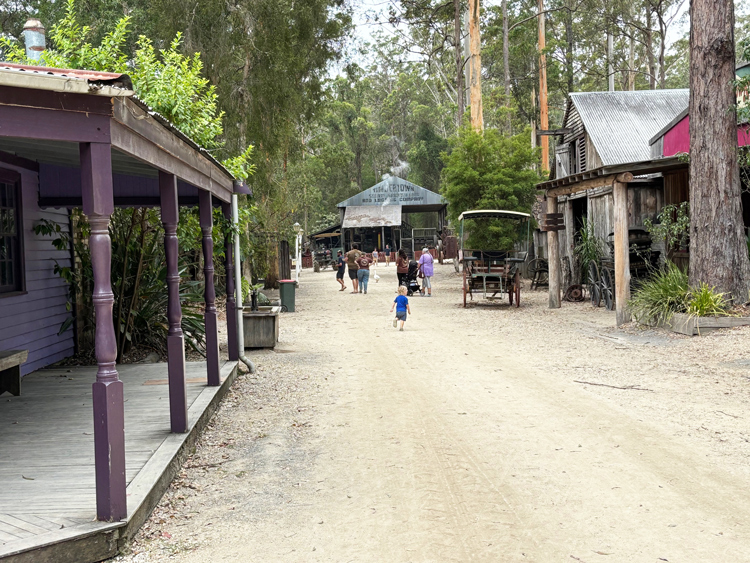
Looking down the cross street towards the sawmill. 11
January 2026.
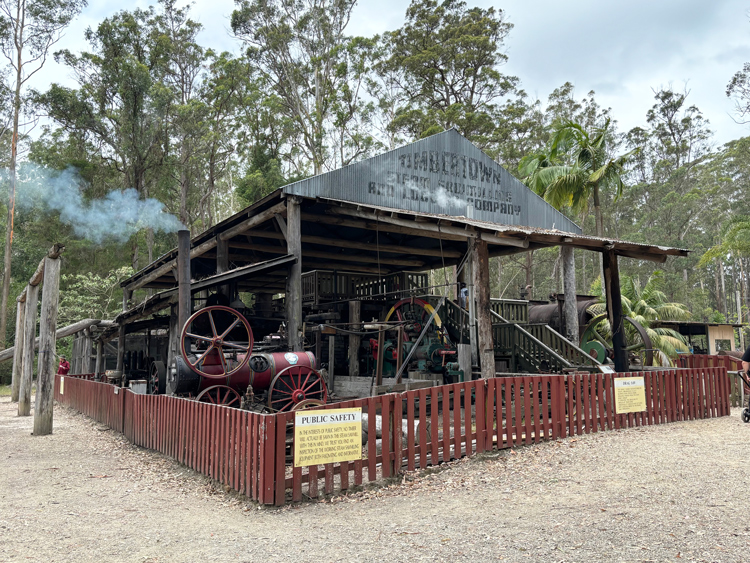
The ‘Timbertown Steam Sawmilling & Logging Company’ mill
is seen here in its final days, 11 January 2026.
Various boilers and steam equipment featured here, with power being supplied by
the road engine in the foreground.
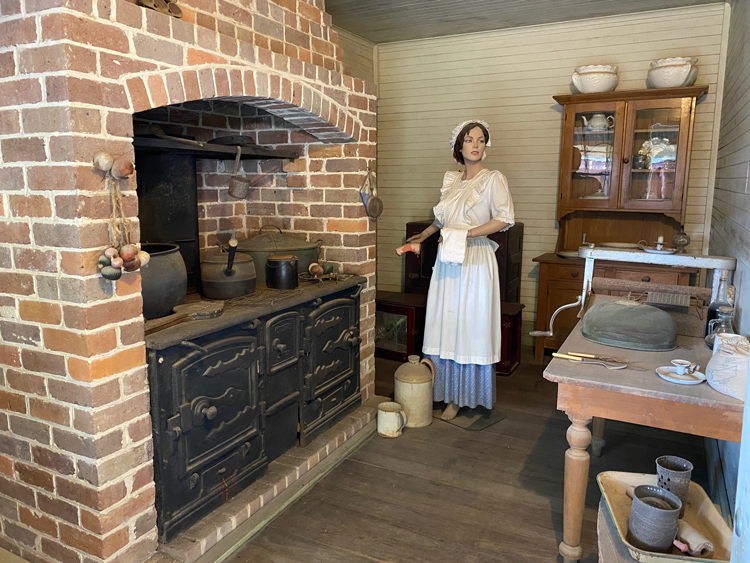
An example of the displays within the reproduction 1880’s
buildings in the village.
This magnificent old wood-fired oven must have taken skill and experience to
manage. 10 April 2023.
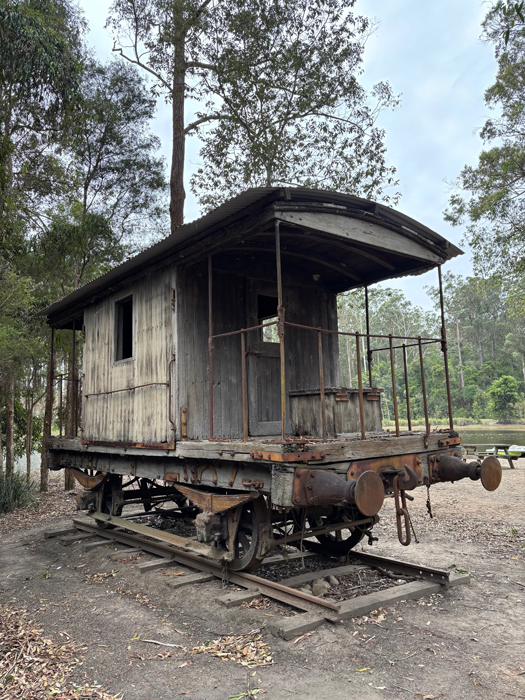
Also resident at Timbertown was this old 4-wheel brake van.
It appears to be from one of the private
coal lines in the Cessnock area.
Hopefully it will find a good home. Photo
date 11 January 2026.
References
|
a |
Light
Railway Research Society of Australia Inc. web site (retrieved 11 February 2026): 'Preserved Australian Sugar Cane
Locomotives' list by John Browning |
|
b |
Light
Railways - Australia's Magazine of Industrial & Narrow
Gauge Railways', Number 161, October 2001, published by Light Railway
Research Society of Australia Inc. |
|
c |
Information provided by Jeremy
Williams via email 11/9/2011. |
|
d |
Timbertown
website
& social media pages: retrieved
11 February 2026 |
|
e |
Webmaster’s observations or
comment |
Page updated: 20 February 2026
|
Government Railways: |
|
|||||||||
|
Private & Industrial Railways: |
|